Incident Learning Requires Accountability Without Easy Blame
A credible investigation examines system conditions and individual choices, then makes fair distinctions instead of choosing between blame and no accountability.
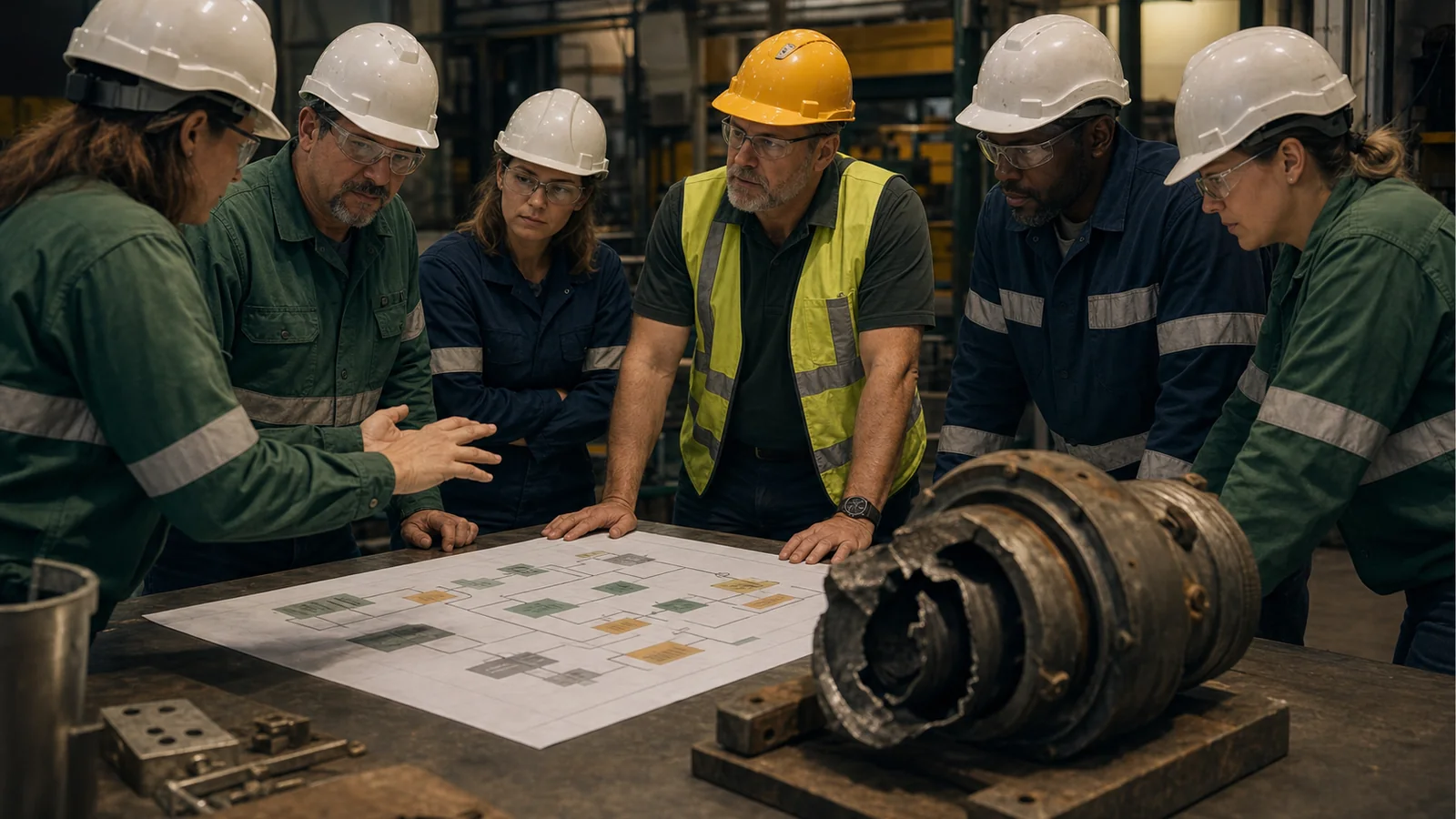
Begin with what happened
Early accounts are incomplete and often shaped by hindsight. Secure the scene, care for affected people and preserve physical, digital and documentary evidence. Build a timeline using several sources rather than relying on the first confident narrative. Separate observed facts from interpretation. The purpose of the initial phase is to understand the event well enough to prevent further exposure, not to identify a person who can absorb organizational anxiety.
Error is a starting point
Statements such as ‘the operator failed to follow the procedure’ describe an action but rarely explain it. Investigators should ask what made the action reasonable or possible at the time: equipment design, workload, goals, supervision, competence, interfaces, usability, fatigue and prior successful adaptations. This does not excuse every choice. It establishes the context needed to distinguish ordinary error, system-induced behavior and conscious disregard of a known substantial risk.
Use a fair accountability test
Evaluate whether expectations were clear, workable, known and consistently enforced. Ask whether the person had the competence, resources and authority to comply; whether others acted similarly; and how the organization previously responded. Deliberate sabotage, impairment or reckless violation may require disciplinary action. Honest mistakes and reasonable adaptations usually require system correction and learning. Similar cases should receive similar treatment regardless of seniority or employment status.
Look beyond one root cause
Complex events usually involve interacting conditions rather than a single root. A causal label such as ‘poor safety culture’ is too broad to correct. Identify the failed or missing controls, the decisions that shaped exposure and the signals available before the event. Examine design, procurement, maintenance, staffing, planning and governance. The investigation should explain both why the event occurred on that occasion and why the same system produced acceptable outcomes on previous occasions.
Write actions that change risk
Strong actions eliminate hazards, improve engineering barriers, simplify interfaces or restore control capacity. Training and procedure revision may be necessary, but they are weak when the underlying equipment or incentive remains unchanged. Give each action an owner, due date and intended risk effect. After implementation, verify whether the action changed the condition. Administrative closure is not evidence of effectiveness.
Share learning with context
A short alert can spread awareness, but stripping away context often leaves generic instructions to ‘be careful’. Explain the work, energy, control failure, contributing conditions and practical changes. Protect privacy and legal requirements without making the lesson meaningless. Invite other sites to test whether the same conditions exist rather than asking them only to acknowledge receipt. Learning occurs when local teams examine their own controls and act.
Learn from normal work too
Waiting for harm provides a narrow and ethically poor source of knowledge. Observe successful high-risk work, difficult recoveries, stop-work decisions and near misses with credible severe potential. Ask how people detect and manage variation. This shows which adaptations strengthen the system and which depend on luck. A mature learning system uses incidents as one input among many, maintains fair accountability and turns evidence into verified control improvement.
Review the sequence, not only the last act
Review one recent event without starting from the person's last action. Build the sequence from records, physical evidence and separate interviews. Note where the procedure, equipment and work conditions shaped the choices available. Use a fair accountability process for any conduct concern, then write actions against the conditions that allowed the event to develop.
Questions that separate fact from assumption
What facts are verified and what remains an assumption? Which conditions made the action seem reasonable at the time? Did the same practice occur without harm before? Which control should have prevented the outcome? Will the proposed action change the work, or only remind people to be careful?
Be fair and thorough
Fair accountability and strong investigation support each other. Neither requires the organization to ignore reckless conduct or blame ordinary error.
Sources & Further Reading
Author/editor: Myaser HSE Hub Editorial
Last reviewed: August 4, 2026
Disclaimer: This article provides general HSE education. Apply applicable law, standards, engineering judgment and competent professional advice to your specific operation.